Publication day!!!

Well, it’s finally happened! Exactly 4 years and 2 days since I started on this latest adventure, Day of Epiphany is now officially published and available at the FriesenPress Bookstore. Cue hfireworks!

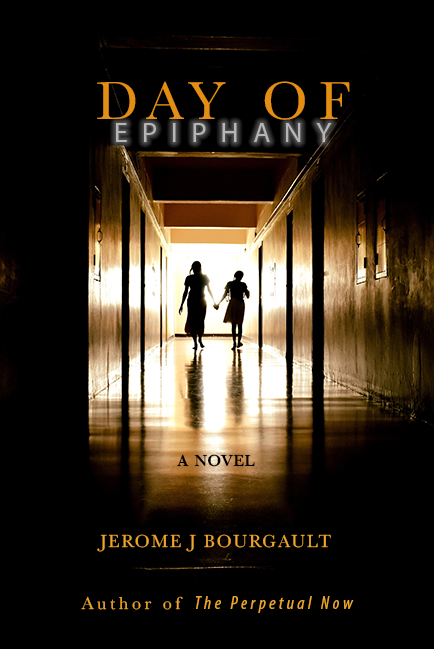
Cover design by the author… in case you hadn’t guessed

As I mentioned in a few social media postings today, a lot is going to happen in the coming weeks and months, and I will be keeping you dutifully informed about readings and signings and (hopefully) a launch. The first such event will be a Local Author Showcase at the Civic Centre Resource Library, 2191 Major Mackenzie Drive in Vaughan, Ontario, where—ironically— I’ll be signing copies of The Perpetual Now. I wanted to get out and talk about my work as close to publication as possible, but seeing as I won’t have copies of Day of Epiphany for at least another 3 weeks, I’ll bring along a few copies of my debut opus and plug both novels. The event will be held this Saturday, October 26th, from 2:00 to 4:00. It’s free, of course, and everyone is welcome.

Meanwhile, I’ve prepared another trailer for the new novel, this one slightly longer, more detailed and—dare I say—more dramatic. You can view the new clip on my Facebook or Instagram pages, or on my YouTube channel (still pending at the time of this writing).

So what’s next? Well, beyond the aforementioned promotional events and inevitable social media onslaught, there will be reviews, award submissions, a smattering of advertising opportunities, perhaps an interview or two (???), as well as a major overhaul to my author website, jeromejbourgault.com (not to be confused with the one you’re currently visiting, which doesn’t have the middle “j”). And when Day of Epiphany isn’t filling my time, maybe The Perpetual Now will be able to ride piggyback on all the attention generated by its younger sibling, and enjoy some of the visibility it was denied as a Covid baby.

And lastly, there’s still novel number 3 which has been resting (and simmering) for a while. I’m looking forward to plunging back into that rabbit hole: who knows what’s been going on down there since I’ve been away?

As always, stay tuned my friends!

Writing about writing: English for French… in Québec… in the 1950s

A unique aspect of Day of Epiphany, which I never had to consider before, was the temporal and cultural distance between myself and the characters I was writing for. This is an English language novel intended for an English speaking audience, but it’s set in 1950s Québec. Unless specifically indicated (three or four scenes in particular) the characters would of course be speaking to one another in French throughout the novel. How to deal with that? Do I address the question at all? The best solution I could come up with was to make the narration, and the dialogue in particular, as natural as possible. As much as I could, I avoided the inclusion of French terms, unless there was no appropriate or better term in English. For instance, at the beginning of the first chapter, I make reference to a père prédicataire (an itinerant preacher), and I use the term curé (parish priest) a fair amount throughout the book as well. These were French terms that I thought important enough for the reader to learn. On the other hand, as tempting as it may be I never make use of the expansive Québécois lexicon of colourful curse words (tabarnak, câlisse, ostie, Crisse, trou de cul, bâtard, etc.). Instead, when my characters need to curse or call someone a nasty name, they do so in English. To do otherwise would be the written equivalent of the tired trope of countless Hollywood war movies, as when German soldiers speak to one another in English with German accents. 

Then, once I’ve committed to writing in English, I had to ensure that the language was consistent with the period, i.e. the 1950s. I recently read a scene from a novel that takes place in the 1980s, in which a character uses the expression “a big ask.” Having lived through the 1980s, I can promise you that NO ONE ever said “a big ask” when meaning “a lot to ask for.” Reading an expression so clearly from the 21st century in a scene from the ‘80s diminished the authenticity of the book for me just a bit, and I had no intention of making that kind of mistake in my own novel, whether the characters are ostensibly speaking French or not. 

At the same time, I deliberately avoided the use of ’50s era vernacular, simply because—rightly or wrongly— I identified it too closely with American popular culture, which felt out of place for for a story set in Québec. I did however use a couple of terms —namely “darwinists” instead of “evolutionary biologists” and “Mohammedans” instead of “Muslims”— that I felt would be appropriate for the period, especially by members of the clergy.

Publication is now days away. I’m spending the remaining days going over (and over and over) the print-ready files for final approval. As usual for me at this point in the process, I’m feeling both elated, excited, and scared shitless!

I wouldn’t want to hazard a guess as to how many times I’ve read Day of Epiphany in the past four months, and I’m happy to say that a) I’m more than satisfied with the quality of the writing, and b) I haven’t found any new typos of late. I’m trusting that you, my faithful readers, will find any remaining mistakes once the book comes out. We’ll know soon enough!

Dramatis Personae

An exhaustive and annotated listing of the characters who inhabit the world of Day of Epiphany. Enjoy!

Sister Cassandra Lalonde: The novel’s main protagonist. As the title would indicate, a nun belonging to a religious order known simply as The Order. Trained as a teacher. Lives and works at Sainte-Madeleine Orphanage in the (fictional) town of St-Jolain, Québec. Born in or around 1930, originally from a small farming community in the Outaouais region of Québec (i.e. the Québec side of the Ottawa River). Daughter of a successful general contractor, the youngest of 10 children. Idealistic, energetic, hard working, goes by the book and somehow gets things done anyway. Universally adored by the orphans.

Hélène Gagnon: Among the more senior orphans at Ste-Madeleine, about 13 when we first meet her. Little or nothing is known about her mother. Has had a mixed placement record, having spent time with various foster parents in between stints at the orphanage. Farther advanced intellectually and socially than most of her peers, she is amazingly poised and wise for her age. One of the orphanage’s bright lights, and one of Sister Cassandra’s Favourite Four.

Suzanne Bourassa: Ste-Madeleine’s most senior orphan and Hélène Gagnon’s best friend. A natural leader, strong of heart and spirit, but whose feistiness sometimes lands her in hot water. Resourceful, headstrong, and fiercely loyal to her friends. Knows how to handle herself in a tight spot, not easily intimidated. The primary suspect in a series of expertly-executed kitchen raids.

Diane Michaud: Another one of the favoured four. Docile, gentle, and exceedingly shy. Physically and socially awkward and has difficulty speaking up for herself. About the same age as Hélène, making her among the older orphans, but is happiest among the younger children. Adored by all who know her. Unquestionably compliant which makes her vulnerable the more predatory elements at Ste-M. Her saving grace is her breathtaking singing voice: the consensus is that it came directly from Heaven.

Eleanora Martin: Ste-Madeleine’s resident enigma. Place of birth unknown. Parents unknown. Age unknown, assumed to be around 9 or 10. Physical appearance also makes her object of suspicion: olive skin, dark brown hair, eyes nearly black. Possibly biracial, Indigenous? Diane’s closest friend. Highly intelligent, curious, kind to others, and utterly unafraid. Has an uncanny ability to vanish for varying stretches at a time. Described as “spooky” by Sister Marie-Claire.

Sister Marie-Claire: Cassandra’s closest friend and ally among the nuns. Teacher. A few years older than Cassandra. Native of Montreal. Realist, outspoken, pragmatic, loyal to her friends and the children first, to the Order a distant second. An individualist who lacks the instincts for modesty, obedience and self-denial that are required of a nun. Relationship with Cassandra sharply mirrors that of Suzanne and Hélène.

Father Marius Normand: Curé (parish priest) of Église Notre-Dame-du-Perpétuel-Secours, known locally as NDPS. Intelligent, handsome and charismatic, an early ally of Cassandra and Marie-Claire because of his positive stance on education. Former headmaster of a Catholic boys college in Northern Ontario. Pragmatist.

The Abbess: Mother Superior and unquestioned boss of Ste-Madeleine. Originally took over as interim leader when previous abbott passed away, and never relinquished the reins. Possibly the most intelligent person in the parish and not afraid to let others know it. Has raised sarcasm to an art form, but a fundamentally moral person who can be reasoned with. Elderly, tall, angular, insect-like in appearance. Feared by almost everyone in the parish and likes it that way. Has a weakness for Sister Cassandra.

Albert Sauvé: Patient and trustee from Saint-Sulpice psychiatric hospital. Has earned a (slightly) elevated status among patients for his readiness to identify and report irregularities to the higher-ups (i.e. he’s a snitch). Adept procurer of contraband, which he trades to satisfy his own needs. Small stature makes him an easy target for the more powerful and brutal staff members. Instinctively despises Sister Cassandra and her favoured brood. Possibly the most interesting character I’ve ever created.

Mother Eugénie: Head of Saint-Sulpice psychiatric hospital. Initially comes across as simple enough, with practical savvy and little time for high-minded ideals, but possesses the ever-turning mind of a career schemer. Driven, will stop at nothing to obtain her goals. Not troubled by self-doubt. Has odd, off-putting habit of making everything she says sound like a question, even when it clearly isn’t.

Father Moreau: Curate at NDPS, Father Normand’s valued right hand. Young, hard-working, idealistic, a close ally to Sister Cassandra. Praised by Normand for his intelligence and discretion.

Lacroix and Patenaude: Saint-Sulpice staffers, big and thuggish, immensely strong and surprisingly quick. Known for their loyalty to whoever signs their paycheques and for being unencumbered by any delusion of morality. Albert Sauvé’s best customers and sometime bodyguards. 

Sister Amélia: A nun at Ste-Madeleine, appointed by the Abbess to be in charge of discipline, which she enforces with the use of a thick, well-worn leather belt. Rightfully feared by all, including most nuns.

Sister Ursula: Sister Amélia’s counterpart from St-Sulpice, and Mother Eugénie’s second in command. Reputed to be even more cruel and sadistic than Amélia. Possesses a wider variety of enforcement implements. 

Father Charbonneau: An old-school itinerant preacher (père prédicataire). Sent by the diocese to travel from parish to parish, staying at local rectories and sermonizing parishioners for days on end about sin, contrition, judgement, death, Hell, suffering and sacrifice. Extremely conservative and vocal about it, despises liberals and “bleeding heart” reformers within the Church. Even Normand finds him hard to take.

Detective Georges Hamel: Police detective with the Saint-Jolain detachment of the Sureté provinciale. Intelligent, dedicated, hard-working, meticulous.

Mr. Mason: Veteran custodian from St-Sulpice. Sees and hears everything, a deep and unexpected source of intel on the goings-on of the Institute and beyond.

Sister Marie-Solange: Young nun, protégée of Mother Eugénie, with whom she bears a striking resemblance. Highly impressionable, unquestioning supporter of the Institute’s mission.

Dr. Lowenstein: Psychiatric specialist at the Institute, sent from a large Montreal teaching hospital to supervise treatment methods. A true believer.

Bishop Deschamps: Architect of the orphan work programs at Ste-Madeleine, believes it unthinkable to allow such a valuable source of free labour to go untapped. Sees little use for education of orphans. Close friend of the provincial premier. 

Robert: A mature, high functioning patient from Saint-Sulpice, labeled as “untreatable”, who feels he doesn’t belong in an institution. He has a plan.

A bit about setting

I’ve been called a very visual writer. I welcome the description. It might come from my background as a visual artist, or my natural, almost obsessive, tendency toward detail, or because film has had such a profound impact on me that it has permeated my writing. All three, I suppose. I have a great admiration for writers who can paint detailed landscapes with words; Tolkien was the master. Of course, the art of it really comes when the writer can paint an evocative and compelling picture using as few words as possible. I’m still working on that and will be for a long time, but I was proud when a reviewer wrote this about The Perpetual Now: 

“the prose is touched with unfussy observational poetry. ‘Ferguston sometimes felt like a war-torn city where all the buildings were left standing,’ Bourgault writes, capturing a rich sense of place in a line.”

Sometimes, a place can be so vivid as to take on a personality of its own. I like to think of Ferguston in that way, that the town had become in fact a very real character in the book, though not necessarily a pleasant one. (That some readers have agreed with that assessment is one of the best compliments I’ve received to date.) As for Ferguston’s counterpart in Day of Epiphany, the town of Saint-Jolain, Québec, I’m not sure it would qualify. Saint-Jolain never evolved that way, simply because most of the action takes place in the Sainte-Madeleine orphanage a few kilometres away, while the town itself has been largely relegated to the background.

Some geography

For those who are interested, I imagine Saint-Jolain to be located somewhere in the general vicinity of Mont-Laurier, Québec, which is about a two-hour drive almost due north of Ottawa, or 45 minutes northeast of Maniwaki. Had I done the same kind of exploratory mission that I did when I was creating Ferguston, I might have located it elsewhere. Who knows. I certainly like the idea of putting in the midst of a huge diocese: the diocese of Amos (where Mont Laurier is located) covers some 127,000 square kilometres. Getting around the diocese in such a remote area back in the 1950s would have been a challenge, and the realities of such an expansive geography work well for the story. As for its appearance, think of a slightly more modern version of a Clarence Gagnon painting, with cars from the ‘40s and ‘50s replacing the horse-drawn sleighs and buggies. (Check out the McMichael Canadian Art Collection which has some excellent examples of Gagnon’s work.) 

The Sainte-Madeleine orphanage comes close to being a character: I do talk about its history and it does go through something of an evolution, but I stopped short of giving it a real personality. Some readers may disagree, and I’d love to hear from you when the book comes out (soon, I promise!). I also toyed with the idea of providing a layout of the building to give it a more detailed identity, but seeing as it’s conceived as a complex four-storey structure, that would have been complicated. Plus the book already has a forward, a preface, an epilogue, an afterword, and acknowledgements: that’s a lot of extras. 

Speaking of characters, just as I did for The Perpetual Now, my next entry will be a full and annotated listing of the people (21 at last count) who inhabit the landscape I’ve created for Day of Epiphany. Stay tuned!

About the epilogue…

One of the casualties from my editing frenzy of The Perpetual Now in 2019 was a scene that involved an exchange between my protagonist, Justin Lambert, and his elderly neighbour Mr. Lovato. In it, Lovato recounts an anecdote about the town of Ferguston and its history of “small-town justice.” While he doesn’t come straight out and promise that the perpetrator of Elise Lambert’s disappearance will be brought to justice, he does suggest that such things have a strange way of balancing themselves out, at least in Ferguston. 

I loved the scene for the colour and depth that it provided—besides the fact that it’s a great bit of storytelling, in a Stephen King-ish kind of way— but at 2 000 words it was far too long to keep considering it didn’t exactly move the plot forward, and cuts had to be made. So, while it didn’t make it to the final manuscript, the scene was preserved in a scraps folder, where all kinds of cherished but unusable bits reside, waiting for some future application.

That happened sooner than I expected. Funny thing about writing: things are revealed to you as you write, be they aspects of a character’s personality, their motivations, their back story, an entire sequence of events, the sudden appearance of someone new, you name it. It almost feels as if the writer is indeed a spectator to the actions in the story, and not the creator. It’s weird. The first time I ever experienced this was during the writing of The Perpetual Now, when Justin witnesses a horrific automobile accident only a few meters away. It became a pivotal part of the story, but I originally had no real plan for it: it just kind of “happened.”

The same thing occurred—more than once, as I think about it—with Day of Epiphany. One of my main characters began to evolve—or should I say “began to reveal themselves”—in a way that made me think of that beloved thrown-away scene from The Perpetual Now, which suggested a very interesting and appropriate fate for the character in question. And, best of all, there would be no need to adjust any part of the scene. The fact that it takes place in 2006, while the brunt of the action in Day of Epiphany takes place between 1950 and 1959, offers a very different—and refreshingly modern—perspective, and gave me the opportunity to connect the two novels in a very unexpected way.

Will the Epilogue cause confusion for people who haven’t read my first novel? Maybe, possibly, initially. It takes place 47 years after the closing events of the novel, and involves two characters whom—with the exception of a single fleeting mention of one of them—the reader hasn’t yet encountered. HOWEVER, I do have faith in the intelligence of my readers, and as they read through it and the narrative connection is revealed, they’ll see the relevance. Also, given the depth of the storyline suggested in these few final pages, hopefully the reader will be intrigued and want to learn more and read The Perpetual Now (I’ve only written the one other book so it shouldn’t be hard to figure out where it came from). And it will be a bit of a treat for those who have read the first novel who will recognize the context immediately.

I’m SO looking forward to your feedback on this and so many other things when the new book is published. Things are really moving, so it shouldn’t be too long!

More to come!

Genesis of a novel: how Day of Epiphany came to be

As early as December, 2018, I’d begun to throw together ideas for my second novel. The Perpetual Now was still over a year away from publication — at this point, it was still a bloated 4th draft that was far too cumbersome to attract any serious consideration from publishers — and I knew I wanted to tell a different kind of story for my follow-up novel, one more rooted in history. 

Over the past few years, I’d been developing an interest in Canadian history of the 1940s and ‘50s, an era when my own parents were in their teens and twenties. Their shared memories of this period had long been incubating in my mind, and while it was never going to be a biographical work, I thought the new novel could be a place where many of their stories might find a voice and live on, while contributing generously to the detail of the picture I wanted to paint. 

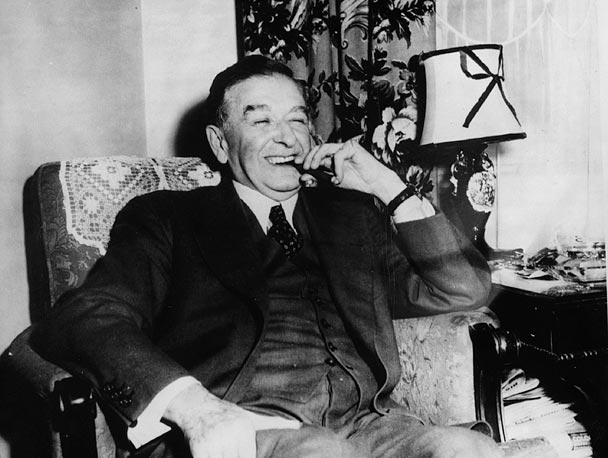
As I threw myself into researching the social history of the period, one name dominated from the start: Union nationale party leader Maurice Duplessis.

this guy

(Credit: Library and Archives Canada / C-031052)

I didn’t know much about Le Chef initially, except that he was premier of Québec for the better part of 20 years, and that he was immensely influential. What they didn’t teach us in high school was his dubious legacy. First, the Duplessis era itself came to be known as La grande noirceur—the Great Darkness—a period of extreme conservatism, sluggish economic growth and stifled cultural development. Second was the scandal of the Duplessis orphans, thousands of children whom he allowed to be deliberately misclassified as mental patients in order to qualify for federal subsidies earmarked for psychiatric hospitals. It was an incredibly compelling and tragic episode which I quickly discovered was largely unknown in English-speaking Canada. I decided this was to be my historical setting. 

Next, the plot. If the story was to be set in 1950s Québec, the Catholic Church would obviously play a central part, one way or another. The Church had a stranglehold on all matters pertaining to social programs, health, and education in the province, and had the full support and protection of the the premier. It was then that I remembered an idea first suggested to me waaaaay back in the ’80s by one of my oldest friends and most valuable collaborators: what happens when a parishioner confesses to a priest in church to committing murder? And what if this person was him/herself a member of the clergy? It was an intriguing plot idea, and forty years later an altered version of it would serve as the opening sequence of my novel. 

In its early iterations, the book that would become Day of Epiphany looked more like a straight-ahead mystery, using the Duplessis era as a backdrop. But as I read more about the period and the tragedy of the Duplessis orphans in particular, it became increasingly important for me to tell more of that story. Aside from Joanna Goodman’s excellent 2018 novel The Home for Unwanted Girls, the subject of the Duplessis orphans has barely been touched in English-language fiction.

Eventually, as it grew in the telling, the novel would focus primarily on the abuse suffered by the children at the hands of nuns and medical staff, and the increasingly desperate efforts of one nun to protect them. No, it’s not an easy book.

Remaining true to its original vision, there is still an element of mystery to Day of Epiphany; call it a historical fiction/mystery cross-over. It is also loosely connected to The Perpetual Now —some people and places will be familiar— and while it doesn’t really delve into the realm of science-fiction, Day of Epiphany resembles its predecessor in that it starts off as one thing, and then—quite subtly—becomes something else entirely. 

More to come…

“You mean it’s DONE done?”

Part 2

In February, I finally did what I should have done months earlier and forwarded the manuscript to a brilliant and trusted colleague and friend (who was also the editor of my 1st novel, and is therefore familiar with my writing style) for a thorough copy and content edit. The process was an eye-opener: at times humbling, at times very gratifying. I could go on at length, but my main takeaway was this. The whole idea of hiring an editor (and especially a content editor) is that you’re paying for someone’s experience in identifying potentially problematic areas in your manuscript. It’s what they do. Remember: the editor benefits from a distance that the author cannot possibly enjoy, made all the more significant if they are familiar with your writing style. If you’re just getting started on your own book, it’s a critical and essential step. Don’t fool yourself into believing you catch everything yourself.

And so, by mid-May, after a final round of refinements (which included the addition of a new prologue), Day of Epiphany was at last truly ready, a full 16 months after my initial claim. Lesson learned.

I once again entrusted my very Canadian work to a very Canadian self-publishing company, this time FriesenPress. Ultimately, the choice to go the self-publishing route was an obvious one. Sure there are downsides: upfront costs, limited  promotional and marketing support, to say nothing of the stigma that persists within the industry. But there are upsides as well, and two in particular made this an easy decision. First, for a control freak like myself, creative freedom is everything. This was always going to be my book, start to finish. Day of Epiphany is an uncompromising novel—that’s the whole point of it— and I’m not about to softened it up or dumb it down to make it more palatable for general consumption. Second, getting the book out as soon as possible was critical for personal reasons. Day of Epiphany is dedicated to my parents, both of whom are 96 years old at the time of this writing, and I would like very much if they were both around to see it when it comes out. Sure, I could have gone off chasing after a traditional publisher but it could have many months or even years, to say nothing of how long it might have taken to get the book out once I found one. 

So, to make a short story long, here we are! The manuscript has been finalized, the cover design approved, and the book is in the production queue with a release set for this winter. It’s done, folks: the countdown has begun and Day of Epiphany is on its way! Of course, there are still a number of steps, but most of the remaining work is now on someone else’s desk. Meanwhile, I’ll be revisiting this space (I know: you’ve heard that one before) to provide some depth about the book, the process, the characters, the setting, much like what I did with The Perpetual Now. Stay tuned.

Oh, and while I’m here, I might also add that work has begun on my as-yet untitled third novel. The general storyline has been largely mapped out (for now) and it’s shaping up to be a more ambitious tale than anything I’ve attempted to date. While it’s not exactly a sequel, the story once again resides in the same universe as The Perpetual Now, and a few of its characters will be making an appearance. 

The fun never ends, folks!

“So, what happened to that book you said you finished?”

Part 1 of 3 2

OK, so maybe I spoke too soon.

Remember a year and a half ago, I claimed that my 2nd novel, Day of Epiphany, was complete and ready to be unleashed upon the world? Yeah, that may have been premature. After being expertly ignored by everyone I submitted to over the better part of a year, I went back to the manuscript thinking I could self-edit the thing into shape. Instead, I spent months of what can only be described as glorified tweaking. Eventually even I could tell the changes were largely cosmetic, so I decided it was time to hand my precious baby over to an editor. The first person I contacted didn’t have time for a full blown edit, but was happy to provide me with an “editorial evaluation.” I figured I’d get a decent idea of what kind of state the manuscript was in, and the price was right, so why not? The results were… disappointing. Somehow, the evaluator didn’t “get” the book. In fact, given how much of the plot seemingly went over their head, I was left to wonder if they had read the novel at all. Back to the drawing board.

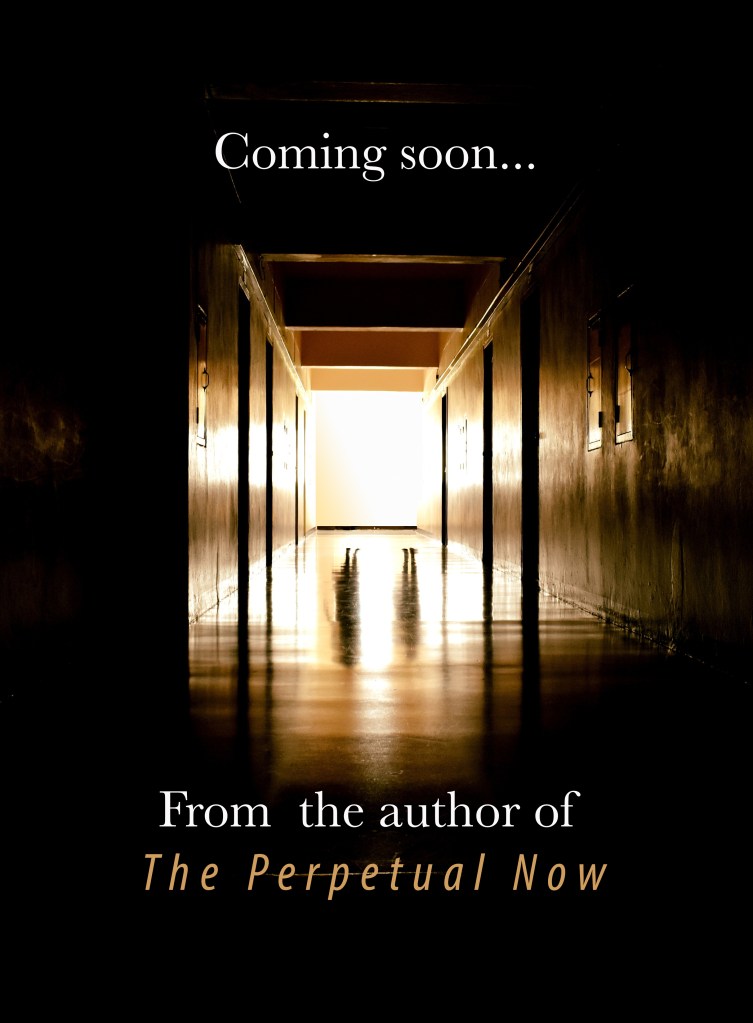
Meanwhile, amid all the waiting and tweaking, I dusted off my graphic designer hat and set about designing the cover. Finding the right image was going to be challenge. Day of Epiphany has a fairly broad narrative scope, and the cover art would have to communicate a lot of things without being convoluted. In addition to being an arresting image in its own right, I wanted it to strike a delicate balance between darkness and hope, to suggest some form of institutional setting—church, school or hospital—that was not too modern (the novel is set in the 1950s), and include a religious or ecclesiastical element if possible. Piece of cake, right? 

After untold hours, I ended up finding the perfect photo on Adobe Stock. It checks all the boxes, and it’s an eye-grabber to boot. A slightly altered version of it will adorn the back cover, and this has been recently teased on social media. In case you missed it, here it is!

(stay tuned for Part 2)

A New Chapter

(… or, rather, 26 of them)

You may remember, waaaaay back in October of 2020, I announced that I’d begun the first draft of my second novel. While it didn’t yet have a title, the general concept was already well established and I had a good idea of where it would go narratively, certainly much better than when I began The Perpetual Now, who’s story revealed itself much more gradually. The difference in the turn-around time was dramatic: rather than labouring on and off for six years, I churned out that first draft in less than 11 months. I guess I must have learned a few things.

Since then, the new work has been reviewed, edited, re-reviewed, re-edited, tweaked, untweaked, retweaked, adjusted, fine-tuned, then put away and left idling by the curb for a number of months, to be then dusted off anew and revived for more tweaking. Oh, and somewhere along the way it acquired a title: Day of Epiphany. 

Now it’s ready to be unleashed upon the world and the real work of getting the book published begins. I’m extremely proud of this novel, and judging from early feedback, I think I’ve succeeded in creating something special: a detailed, intimate, and page-turning fictional account of an oft-overlooked Canadian tragedy, that is at once engrossing and, I must admit, uncompromising. 

Day of Epiphany is not an easy book. In case you need a refresher on the book’s subject matter, here’s how I introduce it in the Foreword:

This novel is a fictional account set against the historical backdrop of Québec’s Grande Noirceur — Great Darkness — a period from 1936 to 1939, and from 1944 to 1959, characterized by the despotic reign of premier Maurice Duplessis and the dominance of the Roman Catholic Church over all aspects of every day life.

Even before Duplessis, the Church held a stranglehold on all matters pertaining to health, education, and social services in Québec, which included hospitals and orphanages. These institutions were, more than anything, extremely profitable ventures that made millions of dollars for the religious orders who ran them. Then, in a manoeuvre designed to redirect federal subsidies earmarked for mental hospitals, Duplessis facilitated the deliberate misclassification of some 7,000 orphans as “mentally ill”. Many of these children were sent to psychiatric facilities or, alternatively, the orphanages themselves were converted into asylums.

These orphans, often the children of unwed mothers pressured by the Church into relinquishing custody, had no rights under the law. Medical orders were forged or fabricated, birth records were altered, identities erased, and children were subjected to experimental drugs, confinement, straight jackets, electroconvulsive shock therapy, lobotomies, and unspeakable levels of abuse.

These children would come to be known collectively as les Orphelins de Duplessis.

So not the lightest reading, but the story is imbued with a surprising amount of humour, it’s thoroughly researched, the characters are painstakingly crafted, and there’s even a mystery element to it that will keep the reader guessing, all in a book that is 30,000 words shorter than The Perpetual Now.

It’s a terribly exciting — and kind of scary — time as I wade back into the publication process, and over the next weeks and months it will be fun to have something new to write about and once again share in the adventure.

Stay tuned!