
As early as December, 2018, I’d begun to throw together ideas for my second novel. The Perpetual Now was still over a year away from publication — at this point, it was still a bloated 4th draft that was far too cumbersome to attract any serious consideration from publishers — and I knew I wanted to tell a different kind of story for my follow-up novel, one more rooted in history.
Over the past few years, I’d been developing an interest in Canadian history of the 1940s and ‘50s, an era when my own parents were in their teens and twenties. Their shared memories of this period had long been incubating in my mind, and while it was never going to be a biographical work, I thought the new novel could be a place where many of their stories might find a voice and live on, while contributing generously to the detail of the picture I wanted to paint.
As I threw myself into researching the social history of the period, one name dominated from the start: Union nationale party leader Maurice Duplessis.
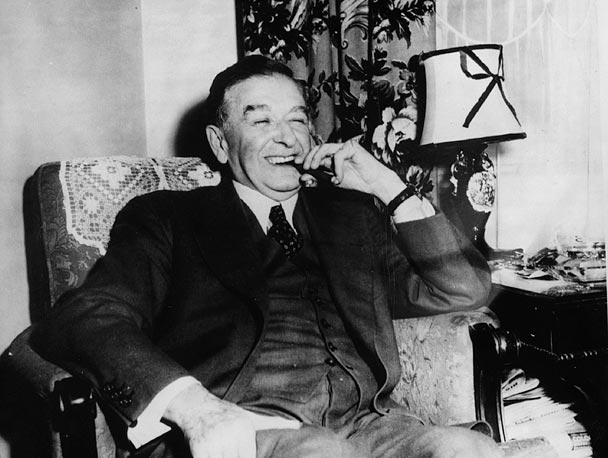
(Credit: Library and Archives Canada / C-031052)
I didn’t know much about Le Chef initially, except that he was premier of Québec for the better part of 20 years, and that he was immensely influential. What they didn’t teach us in high school was his dubious legacy. First, the Duplessis era itself came to be known as La grande noirceur—the Great Darkness—a period of extreme conservatism, sluggish economic growth and stifled cultural development. Second was the scandal of the Duplessis orphans, thousands of children whom he allowed to be deliberately misclassified as mental patients in order to qualify for federal subsidies earmarked for psychiatric hospitals. It was an incredibly compelling and tragic episode which I quickly discovered was largely unknown in English-speaking Canada. I decided this was to be my historical setting.
Next, the plot. If the story was to be set in 1950s Québec, the Catholic Church would obviously play a central part, one way or another. The Church had a stranglehold on all matters pertaining to social programs, health, and education in the province, and had the full support and protection of the the premier. It was then that I remembered an idea first suggested to me waaaaay back in the ’80s by one of my oldest friends and most valuable collaborators: what happens when a parishioner confesses to a priest in church to committing murder? And what if this person was him/herself a member of the clergy? It was an intriguing plot idea, and forty years later an altered version of it would serve as the opening sequence of my novel.
In its early iterations, the book that would become Day of Epiphany looked more like a straight-ahead mystery, using the Duplessis era as a backdrop. But as I read more about the period and the tragedy of the Duplessis orphans in particular, it became increasingly important for me to tell more of that story. Aside from Joanna Goodman’s excellent 2018 novel The Home for Unwanted Girls, the subject of the Duplessis orphans has barely been touched in English-language fiction.
Eventually, as it grew in the telling, the novel would focus primarily on the abuse suffered by the children at the hands of nuns and medical staff, and the increasingly desperate efforts of one nun to protect them. No, it’s not an easy book.
Remaining true to its original vision, there is still an element of mystery to Day of Epiphany; call it a historical fiction/mystery cross-over. It is also loosely connected to The Perpetual Now —some people and places will be familiar— and while it doesn’t really delve into the realm of science-fiction, Day of Epiphany resembles its predecessor in that it starts off as one thing, and then—quite subtly—becomes something else entirely.
More to come…
 So I wrote this novel...
So excited for the release of this book!
LikeLike